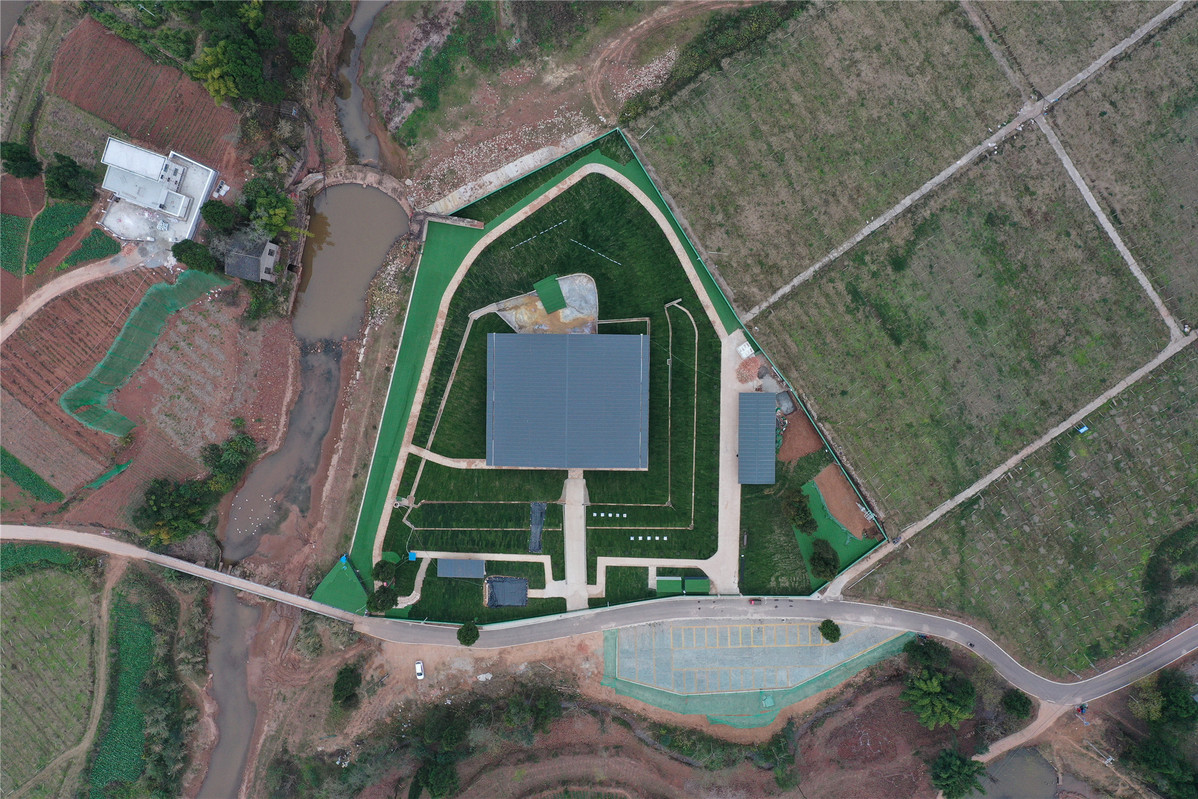
Mengxihe Site
Introduction
The Mengxihe Site, located in Lezhi county within the city of Ziyang, Sichuan province, is a significant archaeological site dating back approximately 50,000 to 70,000 years. Situated in the upper and middle reaches of the Mengxi River, the site is a rare and well-preserved example of a Paleolithic Age settlement. It has yielded an extraordinary abundance of relics, including stone tools, animal fossils, and plant remains, making it one of the richest Paleolithic sites in terms of material remains and evidence of human activity.
The site is notable for its unique water-saturated burial environment, which has preserved organic materials such as plant seeds, fruits, and animal remains. Over 100,000 relics have been unearthed, including more than 60,000 pieces of plant remains, making it the only site in China known for such an extensive discovery of plant remains from the period of modern human origins and dispersal. This discovery has provided a vivid reconstruction of Paleolithic society and has been recognized as one of the six most important archaeological findings of 2023 in China.
Historical Background
The Mengxihe Site dates back to the Late Pleistocene epoch, approximately 50,000 to 70,000 years ago, a period marked by significant climatic changes and the spread of Homo sapiens. The site provides valuable insights into the lives of ancient humans who inhabited the region during this time. Preliminary analyses suggest that the site was formed by ancient humans living near the water, utilizing the abundant natural resources available in the area.
The discovery of the site enriches the understanding of the spread of Homo sapiens in East Asia. It coincides with theories regarding the migration of Homo sapiens from Africa following the super volcanic eruption at Lake Toba in Indonesia around 70,000 years ago. Despite the harsh climatic conditions of the time, the findings at Mengxihe indicate that human activities in East Asia did not cease, and the society appears to have been prosperous.
The site is located approximately 35 kilometers from the location where the Ziyang Man, a human skull dating back 40,000 years, was discovered. This proximity further highlights the region's importance in understanding the development and dispersal of Homo sapiens in southern China.
Archaeological Discoveries
Excavation Process
The Mengxihe Site was discovered in 2019 when a flood unearthed animal fossils, ebony remains, and stone tools buried underground for tens of thousands of years. This prompted a rescue archaeological excavation led by the Sichuan Provincial Institute of Cultural Relics and Archaeology and the Institute of Vertebrate Paleontology and Paleoanthropology of the Chinese Academy of Sciences. The excavation, carried out over two years, revealed the appearance of the site and identified 11 interrelated sites along the Mengxi River, forming the Mengxihe Site group.
The excavation process involved meticulous analysis of the site's cultural layers, which are distributed below the current water level of the Mengxi River. The water-saturated burial environment played a crucial role in preserving organic materials that are typically difficult to retain in archaeological contexts. Advanced techniques were employed to recover and analyze the relics, ensuring the preservation of delicate plant and animal remains.
Key Findings
The Mengxihe Site has yielded an extraordinary array of relics, including over 105,000 stone tools, wood tools, bone tools, and animal fossils. Among these, more than 95 percent of the tools are made from petrified wood, challenging traditional concepts of Paleolithic tool-making in China. The tools exhibit traces of fire, cutting, carving, and polishing, reflecting the sophisticated behavior of ancient humans.
The site has preserved remains of more than 30 types of animals, including elephants, rhinoceroses, bears, cattle, deer, macaques, fish, turtles, snakes, frogs, birds, porcupines, and bamboo rats. These findings represent a complete range of large, medium, and small animals, as well as water, land, and air species, providing valuable insights into the biodiversity of the region during the Late Pleistocene epoch.
In addition to animal remains, the site has yielded over 60,000 plant relics, including seeds, fruits, and spores from more than 30 families. Edible plants such as peach, grape, plum, walnut, and acorn have been identified, offering evidence of the gathering practices of Paleolithic humans. The discovery of Sambucus thunbergiana suggests that ancient humans may have used herbs for medicinal purposes.
The findings at Mengxihe have provided a rare three-dimensional reconstruction of Paleolithic society, showcasing the relationship between humans and their environment. The site contains traces of complex human activities, including the development and use of bone and wooden artifacts, utilization of animals and plants, and carvings on bones, stones, and acorns.
Cultural Significance
The Mengxihe Site is a landmark discovery in the study of Paleolithic archaeology, not only in China but globally. Its rich material remains and evidence of human activity provide a vivid view of life during the Late Pleistocene epoch. The site offers insights into the relationship between ancient humans and their environment, shedding light on their adaptation to climatic changes and their use of natural resources.
The discovery of plant remains at the site is particularly significant, as it represents the first evidence of plant-based food gathering during the Paleolithic period. This challenges traditional perceptions of Paleolithic societies as primarily reliant on hunting and highlights the importance of plants in their diet and medicinal practices.
The Mengxihe Site also contributes to the understanding of the spread of Homo sapiens in East Asia, offering new evidence for theories regarding human migration and survival during periods of climatic upheaval. Its findings have implications for multiple disciplines, including paleophyte studies, environmental research, climate analysis, and dendrochronology.
Preservation Efforts
Efforts to preserve the Mengxihe Site have been undertaken by various cultural heritage and archaeological institutions. The site's unique water-saturated burial environment has been carefully studied to ensure the preservation of organic materials. Advanced techniques and technologies have been employed to recover and analyze the relics, minimizing damage to the delicate remains.
The Sichuan Provincial Institute of Cultural Relics and Archaeology has collaborated with national and international experts to develop strategies for the site's long-term preservation. Measures have been implemented to protect the site from natural disasters, human activities, and other threats.
In addition, the findings from the Mengxihe Site have been documented and shared with the academic community, ensuring their accessibility for future research. The site has also been recognized as a significant cultural heritage site, highlighting its importance in understanding the history and development of human civilization.








